
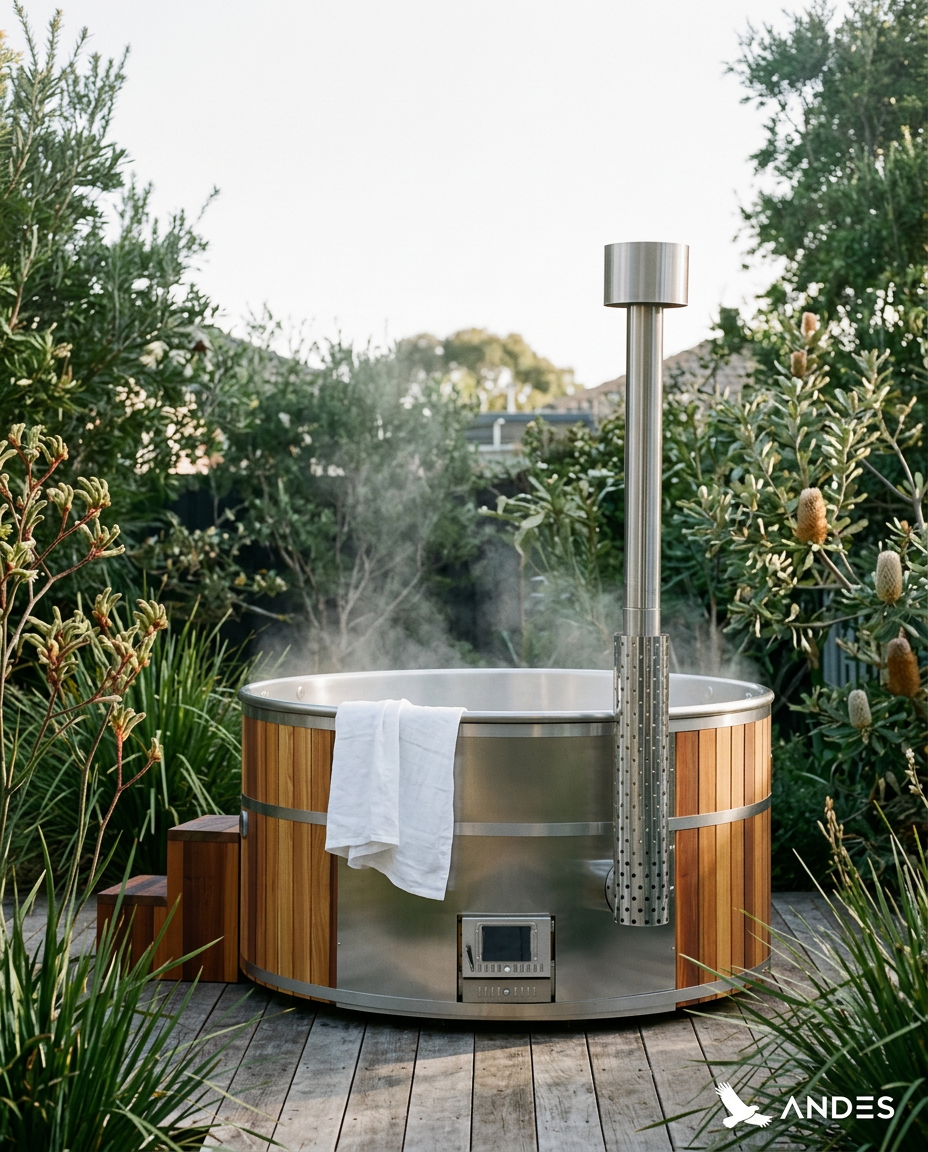
A wood fired hot tub relies solely on a submerged firebox to heat the water, while a hybrid model integrates that same firebox with an electric heating element for dual-source versatility. The choice hinges on lifestyle, usage patterns, and the desire for off-grid capability versus modern convenience. For Australian conditions, a hybrid offers a flexible solution that works across all seasons, fire restrictions, and spontaneous soaking habits.
Table of Contents
- How does a hybrid hot tub heating system actually work?
- What are the main benefits of choosing a wood fired hot tub?
- What are the advantages of a hybrid hot tub for Australian conditions?
- What should I consider regarding running costs and installation requirements?
- How do heating times and maintenance compare between the two systems?
- What kind of warranty and lifespan can I expect from a premium hot tub?
- How do I choose between a wood fired and hybrid hot tub for my home?
- Key takeaways
- References
How does a hybrid hot tub heating system actually work?
A true hybrid hot tub combines a wood-fired firebox with an electric heating system, allowing the user to operate either method independently or simultaneously. The wood-fired component functions identically to a dedicated wood-fired tub, using a submerged firebox to transfer heat directly to the water. The electric element, often a heat pump or resistance heater, is designed to maintain temperature, prevent freezing, and provide convenient heating without the need for tending a fire. A hybrid is not a third type of heating, but rather a dual-system unit that offers the best of both worlds. Some manufacturers call a tub hybrid based on insulation or energy-saving electronics alone, but a true hybrid heats water two different ways. The hybrid hot tub concept works by pairing the same firebox as a wood-fired model with the same heating and filtration system as an electric model. This dual approach means the tub can run on wood off-grid with no power needed, or switch to electric for set-and-forget temperature control.

What are the main benefits of choosing a wood fired hot tub?
Wood-fired tubs offer complete off-grid capability, requiring no electrical wiring or power connection. A wood-fired tub needs just a fill of water and a lit fire to begin heating. They provide a traditional, ritualistic experience, with the crackle of the fire and the process of heating adding to the ambiance of the soak. Running costs are typically lower as they rely on a renewable resource, wood, which can be sourced locally. They are often simpler in design with fewer mechanical components that could require servicing, appealing to those who value self-sufficiency. A wood-fired hot tub suits homeowners who want a digital-free retreat and do not mind the ritual of building and tending a fire. The experience is as much about the process as the result, with the slow heat-up becoming part of the evening's rhythm.

What are the advantages of a hybrid hot tub for Australian conditions?
A hybrid system offers flexibility, allowing users to enjoy a quick, convenient electric-heated soak on weekdays and a slower, more traditional wood-fired experience on weekends. The electric system is a failsafe during summer fire bans, when wood fires may be restricted, ensuring the tub remains usable. A hybrid hot tub can keep working during a summer fire ban when a wood-fired-only tub cannot. It provides a reliable way to maintain water temperature and prevent freezing in cooler Australian climates, such as the southern states or alpine regions. This dual system can extend the usability of the tub across all seasons, making it a more versatile long-term investment for discerning homeowners. The hybrid tech collection is designed for those who want the soul of a wood fire with the convenience of electric heating.
What should I consider regarding running costs and installation requirements?
Installation requirements differ significantly between the two systems. Wood-fired tubs need no electrical work, while hybrids require a standard power supply, typically a 15 AMP circuit, for the electric heater, which may necessitate a licensed electrician. Running costs for wood-fired heating depend on the price and availability of firewood, whereas electric heating costs are tied to your energy tariff and the heater's wattage, such as a 3kW element. A hybrid allows you to manage running costs by choosing the cheaper heating source for the situation: wood for a full heat-up, electric for maintaining temperature. Consider the placement for both systems. Ventilation for the chimney is crucial for wood-fired operation, while hybrid models need proximity to a power source. The installation and site prep requirements should be assessed before committing to either heating style.
How do heating times and maintenance compare between the two systems?
A wood-fired system can heat a tub from cold in one to two hours, offering a rapid heat-up that is part of the experience, while electric systems are generally slower for a full heat from cold. Electric heating excels at maintenance, keeping the water at a set temperature of up to 41 degrees with minimal effort, whereas a wood fire requires regular stoking to maintain heat. Maintenance for both involves standard water care, but hybrid owners must also consider the upkeep of the electric heating element and controls alongside the firebox. A wood hot tub heater guide can help owners understand the nuances of firebox care and efficient burning practices.
What kind of warranty and lifespan can I expect from a premium hot tub?
The durability of a hot tub is a key investment factor, with some manufacturers offering a substantial 50-year structural warranty on their inner barrels, demonstrating a commitment to longevity. The choice of materials, such as a hand-crafted stainless-steel interior or a 100% natural cedar cladding, is a strong indicator of the tub's ability to withstand harsh Australian climates. A longer warranty on the structural shell provides peace of mind, while the heating components, firebox and electric heater, are typically subject to a separate, shorter warranty period. When comparing options, look beyond the initial price to the quality of craftsmanship and the guarantee behind it, as this reflects the expected lifespan of the product. The warranty and aftercare terms should be reviewed carefully before purchase, as they reveal how confidently a manufacturer stands behind its work.
How do I choose between a wood fired and hybrid hot tub for my home?
Assess your lifestyle first. If you value a digital-free, off-grid retreat and do not mind the ritual of the fire, a wood-fired tub is a pure, self-sufficient choice. If you desire flexibility for spontaneous soaks and year-round use in all weather conditions, a hybrid offers the convenience of electric heating with the soul of a wood fire. Consider your property's infrastructure. If running a power supply to the tub's location is difficult or costly, a wood-fired model simplifies installation. Think about the long-term experience you want. A hybrid from a premium brand offers a blend of tradition and modern convenience, designed for those who appreciate both the ritual and the ease of use. The help me choose resource can guide you through the decision based on your specific property and preferences.
Key takeaways
- A true hybrid hot tub combines a wood-fired firebox with an electric heating system, allowing for independent or simultaneous use.
- Wood-fired hot tubs require no electrical wiring, offering a completely off-grid heating solution.
- Hybrid hot tubs provide a practical workaround during summer fire bans when wood fires are restricted.
- Electric heating in a hybrid system is ideal for maintaining water temperature and preventing freezing in cooler climates.
- Installation for a hybrid tub requires a standard power supply, typically a 15 AMP circuit, unlike a purely wood-fired model.
- A wood fire can heat a tub from cold in one to two hours, offering a faster initial heat-up than most electric systems.
- Some manufacturers offer a 50-year structural warranty on their stainless-steel inner barrels, signifying a long-term investment in durability.
Share:
Hot Tub Wood Fired vs Electric: 2026 Running Costs Australia
What should I know before buying a wood fired hot tub in Australia?