
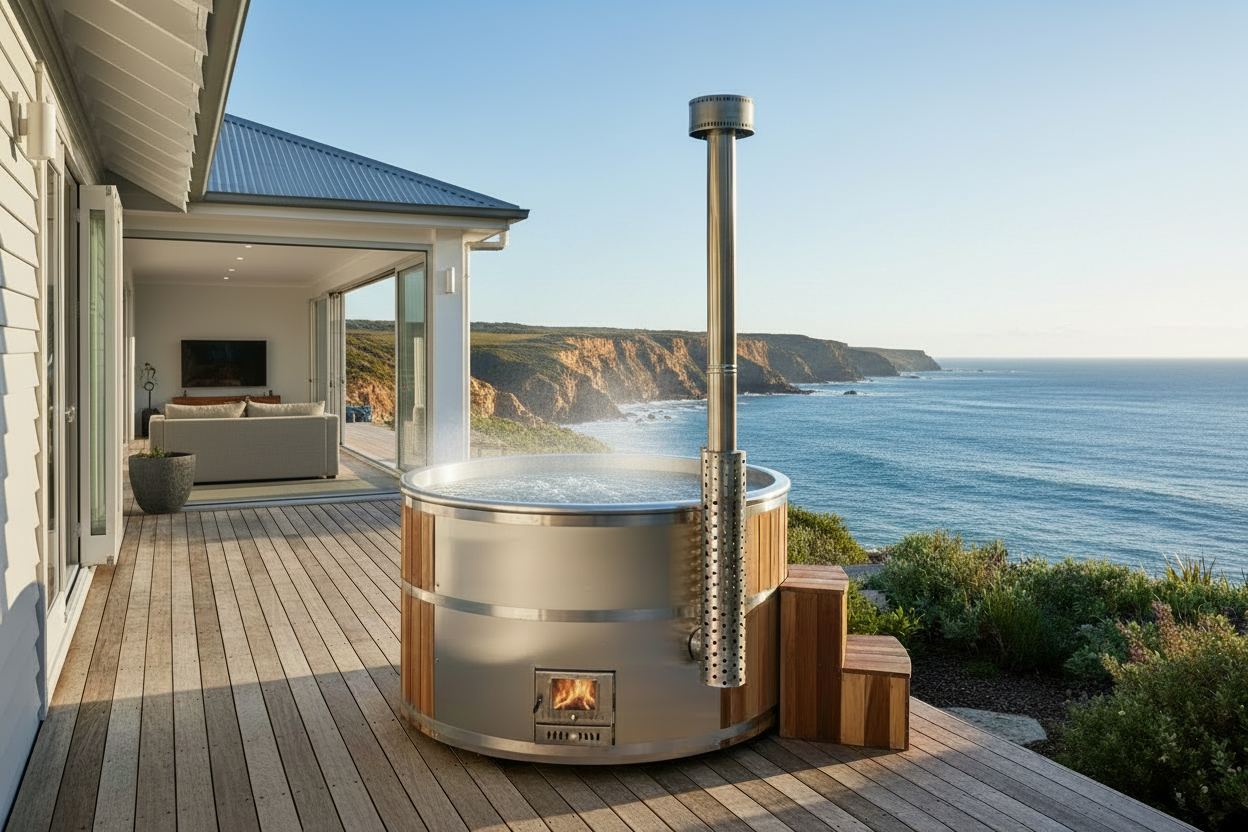
Finding the right backyard hot tub privacy ideas can transform a bare, exposed hot tub into the secluded retreat you actually want. Across Australia, the reality of suburban living means smaller blocks, closer neighbours, and double-storey homes that peer directly into your outdoor space. Without a thoughtful privacy plan, a relaxing soak can feel more like a public display. This guide walks you through permanent structures, natural landscaping, temporary hacks for renters, and climate-specific advice tailored to Australian conditions. Whatever your budget, from a couple of hundred dollars to a full-scale build, there is a solution here that fits.
Disclaimer: Council, strata, and safety rules vary by state, council, and scheme. This guide is general information only. Always check your local council's Development Control Plan (DCP), strata by-laws, and pool/spa safety requirements before building or installing screens, fences, or structures.
Why Privacy Matters for Your Aussie Hot Tub
The typical Australian backyard is no longer the sprawling quarter-acre block of decades past. Infill development, townhouses, and subdivided lots mean your hot tub might sit just metres from a neighbour's kitchen window or upstairs balcony. That "fishbowl" feeling kills relaxation before it starts. True unwinding requires a sense of enclosure and security—a space where you can switch off without feeling watched.
Privacy screens and structures do more than block sightlines. A well-placed fence or hedge also cuts the wind that can chill you the moment you stand up, and it helps muffle the hum of the hot tub pump and the sound of splashing water. From a property perspective, a quality privacy installation, like a built-in pergola or a frosted glass fence, adds genuine value. It signals a considered outdoor room rather than a portable tub dropped onto the lawn.
Navigating Council Rules and Strata Restrictions
Before you dig a post hole or order materials, understand what your local council and community scheme will allow. This step is often overlooked, and skipping it can lead to expensive rectification orders.
In Australia, most councils require a development application (DA) or a complying development certificate (CDC) for any structure exceeding certain thresholds. Rear and side fences up to about 1.8 m may be exempt or complying development in many areas, but front fences are often limited to around 1.2 m. Pergolas and roofed structures, especially those attached to the house or over around 3 m in height, often trigger a permit requirement. Check your local council's Development Control Plan (DCP) for the specific rules that apply to your property.
If you live in a strata scheme, community title, or a housing estate with a body corporate, the restrictions tighten further. Many schemes have by-laws that control the appearance, height, and even the colour of backyard structures. Some ban permanent fixtures outright without committee approval. Before you build, run through this quick checklist:
-
Confirm council setback rules from boundaries and easements
-
Check your property's Bushfire Attack Level (BAL) rating if you are in a bushfire-prone area
-
Verify whether a heritage overlay applies
-
Get written strata committee approval if required
For renters or anyone in a strict scheme, the temporary solutions covered later in this guide are the safest and smartest path forward.
Important: Pool and spa safety barriers
In many states, spa pools that can hold water to a depth of 30 cm or more are subject to pool safety barrier laws (AS 1926.1) and must be registered. Some hot tub pools may be exempt from a fence if they have a compliant, lockable child-safe cover (lid, grille or mesh) that meets strict construction standards, but this is assessed case-by-case and does not apply to swim spas or plunge pools. Barriers generally must be at least 1.2 m high, with a 900 mm non-climbable zone on the outside and a 300 mm clear zone on the inside. Always confirm your state and council requirements.
Permanent Privacy Structures (For Homeowners)
If you own your home and plan to stay put, a permanent structure delivers the best long-term result. These options range from classic timber fencing to high-end glass enclosures.
Slatted Timber and Composite Fencing
A slatted timber fence is the quintessential Australian backyard screen. It pairs naturally with native gardens and suits everything from weatherboard cottages to modern rendered homes. The cost typically runs from $400 for a small DIY section to $8,000 for a full custom installation. Timber looks beautiful but demands annual oiling or sealing, especially under the harsh Australian sun. Composite fencing, made from recycled wood and plastic, costs more upfront but shrugs off UV and moisture with almost no upkeep. For the best balance of airflow and privacy, use horizontal slats with narrow gaps. The gaps allow breezes to pass through while breaking up the direct sightline from neighbouring properties.
Pergolas with Adjustable Louvres or Blinds
A pergola over the hot tub gives you full overhead coverage and a defined sense of enclosure. Prices span from $2,000 for a basic kit to $15,000 for a custom motorised system. The standout upgrade is an adjustable louvred roof. With the touch of a button, you can angle the blades for sun, close them against rain, or open them completely on a clear night. For the sides, install UV-rated outdoor blinds. Ziptrak-style blinds, which run on a tracked system, are hugely popular in Australia. They drop down to block the afternoon glare and prying eyes, then retract when you want the open-air feel. Make sure any fabric you choose carries a high UV block rating; the Australian sun will degrade cheap materials quickly.
Frosted Glass Fences
For a high-end look that does not sacrifice natural light, frosted glass panels are hard to beat. This solution costs between $600 and $4,200 depending on the number of panels and the framing system. The frosted finish obscures the view while letting sunlight flood through, so your hot tub area stays bright and open rather than feeling boxed in. Glass is particularly well-suited to coastal properties. Unlike steel or timber, it does not corrode or rot in salt-laden air.
The critical safety requirement is that all panels must be tempered (toughened) safety glass complying with Australian Standard AS 1288:2021. Also consider slip resistance: wet feet on smooth concrete near a glass fence can be hazardous, so specify a textured or non-slip paver surface around the tub.
Sunken or Raised Hot Tub Decks
Sometimes the best privacy barrier is the ground itself. A sunken hot tub, set below the level of the surrounding patio or deck, uses the earth and retaining walls as a natural screen. From a neighbour's perspective, you simply disappear below the sightline. The reverse approach works just as well: a raised deck with a built-in slatted fence creates a contained "room within a room" that feels intimate and protected. Both options require structural engineering for the deck loads—a fully filled hot tub is extremely heavy—so factor professional design into your budget. The cost varies widely depending on site conditions, but expect to invest several thousand dollars at minimum for a safe, compliant build.
Natural and Landscaping Privacy Solutions
Plants offer a softer, living privacy screen that improves with age. The trade-off is time, but the result is a lush, green backdrop that no man-made fence can fully replicate.
Fast-Growing Hedges and Screening Plants
For quick results in Australian conditions, Lilly Pilly (Syzygium) is the go-to choice. It grows fast, responds well to pruning, and produces glossy green foliage year-round. Murraya, or Orange Jessamine, is another dense option with the bonus of fragrant white flowers. If you prefer a tropical look, clumping bamboo varieties like Bambusa textilis create a tall, narrow screen. Avoid running bamboo species; they are invasive and notoriously difficult to remove, and some councils in New South Wales list them as declared weeds. A hedge will set you back between $500 and $4,000 depending on plant size and quantity. Standard tubestock takes one to three years to fill in properly. If you want immediate privacy, ask a nursery about advanced hedging plants, which are grown in larger pots and already stand over a metre tall.
Climbing Vines on a Trellis
A trellis with a fast-growing vine is one of the most affordable ways to build a green wall. Star Jasmine is the standout performer for Australian hot tub areas. It is evergreen, produces a sweet fragrance, and does not drop messy flowers into the water. Wisteria is a deciduous alternative that gives dappled shade in summer and lets the winter sun through, but it needs a sturdy structure and regular pruning. A simple timber or metal mesh trellis costs between $100 and $500 to build. Keep the trellis freestanding rather than attached to a timber fence, as vines can trap moisture and accelerate rot.
Rock Gardens and Gabion Walls
For homes in bushfire-prone zones rated BAL 12.5 to BAL 40, plant-based screens may not be suitable close to the house. A gabion wall—essentially a wire cage filled with stone—is a non-combustible, modern alternative that doubles as a privacy barrier. The stone mass also absorbs heat during the day and releases it slowly at night, creating a warmer microclimate around the tub. Gabion walls cost between $500 and $4,000 and are labour-intensive to build, but once in place they require zero maintenance. Soften the look by planting native grasses or succulents along the base.
Temporary and Rental-Friendly Privacy Hacks
Not everyone can drill into brickwork or sink permanent posts. These solutions are fully removable, making them ideal for renters, strata dwellers, or anyone who wants to test a layout before committing.
Vinyl Tarp Curtains
Commercial-grade vinyl tarps are a legitimate primary solution, not a last resort. They are weather-resistant, customisable with grommets and poles, and cost between $200 and $2,000 depending on size and quality. The key advantage for renters is that you can mount them on freestanding frames weighted with concrete pots, avoiding any ground anchors or wall fixings. In high-UV Australian conditions, standard vinyl can degrade and become brittle within two to three years. Spend a little more on marine-grade or UV-stabilised tarps, and take them down during the harshest summer months if possible to extend their life.
DIY Portable Posts in Concrete Pots
This clever hack is one of the most strata-friendly solutions available. The concept is simple: set a 4x4 treated pine post into a large concrete pot, roughly 300 millimetres in diameter, and secure it with quick-set concrete. Once you have two or more posts positioned where you need them, attach a retractable shade screen or outdoor curtain between them. Add flower planters at the base of each pot to hide the concrete and soften the look. Each post-and-screen unit costs around $150 to $300. The entire setup is freestanding, movable, and leaves no trace when you move out.
Shade Sails and Tension Rod Systems
Shade sails are an Australian backyard staple, and they work brilliantly as directional privacy screens. A single triangular sail, tensioned between the house and a post, can block the one sightline that matters most without enclosing the entire area. For renters who cannot drill into brick or concrete, heavy-duty tension rods—like oversized shower rods—can be fitted between two existing walls or posts to hang a curtain. A basic shade sail or tension rod setup costs between $50 and $300. Check the wind rating if you live in a cyclone-prone region; a poorly secured sail becomes a dangerous projectile in a storm.
Climate-Specific Considerations for Australian Backyards
Australia's climate is not uniform, and your privacy materials need to match your local conditions. This is where many generic overseas guides fall short.
In high-UV regions, which covers most of the country, untreated timber will warp and crack, and standard vinyl will break down fast. Choose solution-dyed acrylic fabrics, powder-coated aluminium frames, and timber that is either naturally durable like spotted gum or properly sealed.
Coastal properties within five kilometres of the ocean face salt spray corrosion. Stainless steel fixings must be grade 304 or preferably 316 marine grade. Frosted glass and aluminium screens hold up far better than timber or raw steel in these conditions.
For bushfire zones rated BAL 12.5 through to BAL 40, the rules are strict and non-negotiable. Avoid timber screens, bamboo, and soft plastics anywhere near the hot tub. Use only non-combustible materials: steel, stone, glass, or masonry. Refer to Australian Standard AS 3959 for the specific construction requirements that apply to your BAL rating.
In cyclone-prone areas of North Queensland and the Northern Territory, every structure must be engineered for wind loads. Retractable screens and shade sails need to be rated for cyclonic conditions and properly anchored—even the temporary ones.
Integrating Lighting and Sound for the Ultimate Private Hot Tub
Privacy is not just visual. The way your hot tub area sounds and feels after dark completes the experience.
Lighting
For lighting, layer three types:
-
Ambient light from warm white string lights or LED strips tucked under the tub rim creates a soft glow.
-
Task lighting along paths and steps prevents trips and falls when you get in and out.
-
Accent lighting, like a small uplight aimed at a feature tree or a gabion wall, adds depth.
Stick to a warm colour temperature around 2700K, which feels inviting rather than clinical. All outdoor lighting should be IP65 rated for water and dust resistance and installed by a licensed electrician in accordance with AS/NZS 3000.
Sound
On the sound front, the hot tub pump is usually the loudest element. A simple acoustic pump cover or a rubber isolation mat under the pump can cut the noise noticeably. To mask neighbour conversations and traffic hum, add a small water feature. A fountain or a sheet of falling water creates a natural white noise that blends everything else into the background.
Cost Comparison at a Glance
Prices below are in Australian dollars and cover materials unless installation is specified.
Frequently Asked Questions
What is the cheapest hot tub privacy option?
A vinyl tarp curtain or a single well-placed shade sail can be done for under $300. Both are effective, removable, and require no permanent modifications.
How to add privacy to a hot tub without a fence?
Use tall potted plants like clumping bamboo in large containers, a freestanding timber or metal screen, or a retractable curtain system mounted on portable posts. These options create a visual barrier without triggering fence regulations, but still check council and strata rules.
Can I use plants for hot tub privacy?
Yes, and it is one of the most attractive long-term solutions. Choose fast-growing, dense species like Lilly Pilly or Murraya. Be prepared to wait one to three years for full coverage unless you invest in advanced hedging plants.
Do I need a permit for a hot tub enclosure in Australia?
In many cases, yes, if the structure exceeds about 1.8 m in height, includes a roof, or is attached to the house. Temporary, freestanding screens under 1.8 m often do not require a permit, but check your local council's Development Control Plan.
What materials are best for bushfire-prone areas?
Stick to non-combustible materials: steel, stone, glass, or masonry. Avoid timber, bamboo, and vinyl screens within the asset protection zone around your home, especially in BAL 12.5–40 zones.
The right privacy solution depends on your budget, how long you plan to stay, and the specific climate challenges of your location. If you are renting or unsure where to start, try the portable post and screen hack. It costs little, takes an afternoon to build, and gives you a real feel for the layout before you commit to something permanent. Ready to create your private oasis? Browse our range of hot tubs and accessories at Andes Hot Tubs.
Share:
How to move your hot tub: A Simple, Stress-Free Delivery Guide for 2026